

Purpose-built AI, tailored to real professional roles
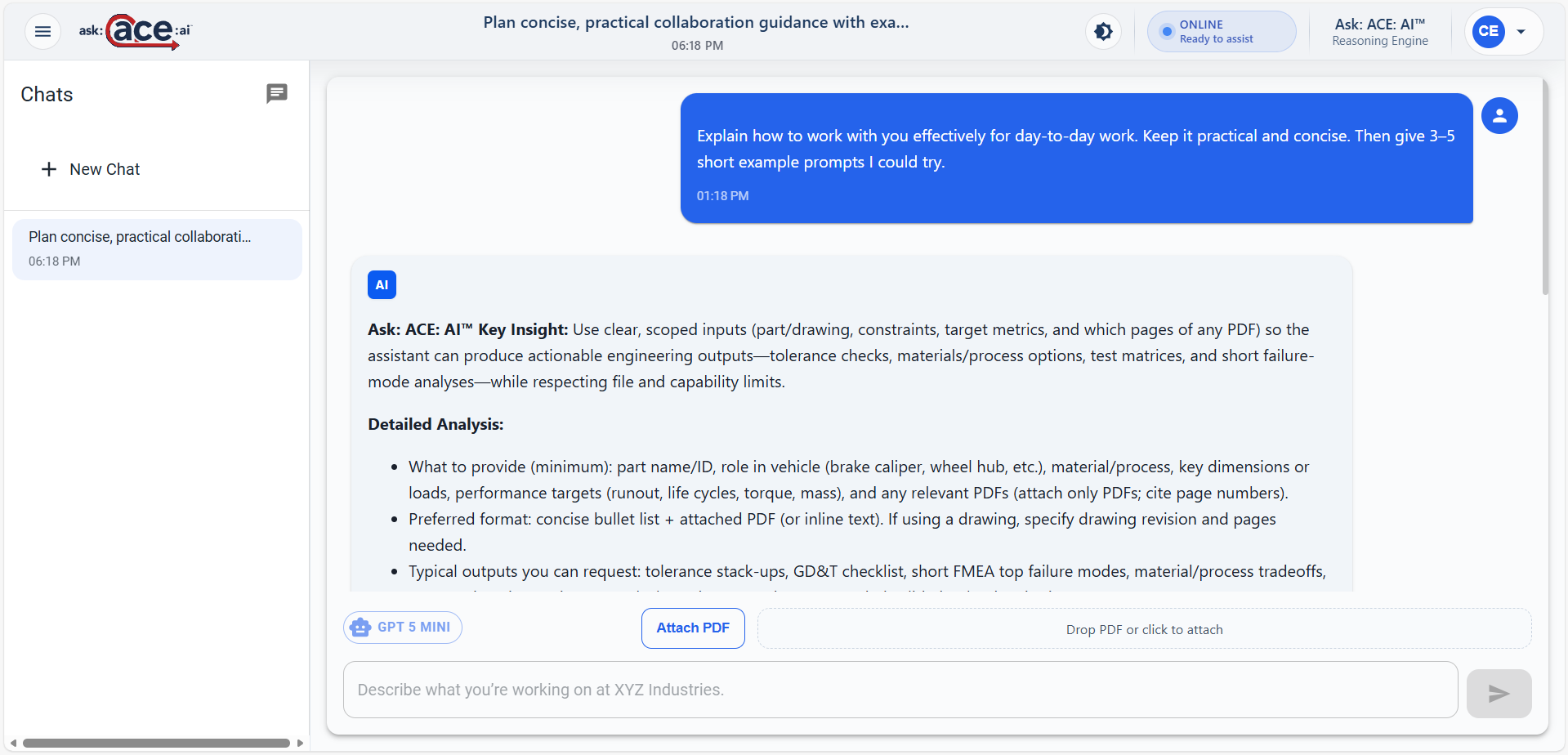
Ask: ACE: AI™ is a role-aware assistant that responds like an experienced colleague. It interprets information from drawings, specs, PDFs, and real-world situations through the lens of professional accountability—turning complex inputs into clear, structured guidance teams can act on.
First proven with Tier-1 and Tier-2 automotive suppliers, Ask: ACE: AI™ is designed for any professional team that works under real constraints, deadlines, and shared responsibility.
What is Ask: ACE: AI™?
Ask: ACE: AI™ is a role-aware AI assistant built to support professional judgment.
It responds to situations the way experienced engineers, buyers, managers, and leaders do—starting with a clear Key Insight, followed by the reasoning, assumptions, and next actions behind it.
Our Mission
Our mission is to make AI practical, focused, and trustworthy for working professionals—helping teams move faster without losing control of quality, cost, or risk.
Ask: ACE: AI™ is designed to complement expertise, not replace it. It acts as a digital colleague that operates within your professional context, helps you see around corners, and turns scattered information into clear, actionable guidance.
What Makes Ask: ACE: AI™ Different
Role-Specific Insight
Ask: ACE: AI™ is tuned to your role, function, and responsibilities.
Responses are framed around risk, cost, timing, and deliverables—rather than generic explanations—so guidance aligns with what you’re accountable for.
Answers like an experienced colleague
Every response begins with a Key Insight, followed by detailed reasoning and next steps.
You get the takeaway first, then the context needed to act in a review, email, or meeting.
Focused and guarded by design
Guardrails keep conversations within your defined professional scope.
Ask: ACE: AI™ avoids off-topic answers, flags missing context, and makes clear what falls outside its domain—supporting responsible use at scale.
Built for real work, not demos
Responses are structured for real decision-making—using the language and formats common to RFQs, checklists, tolerance discussions, risk summaries, validation planning, and short decision memos—so teams can move directly into the tools and processes they already rely on.